
United Arab Emirates · Brewing water
Dubai tap water for coffee: tap or bottled?
DEWA's published figures for Dubai tap water, set beside Al Ain, Mai Dubai and the SCAA brewing standard, with a three-cup blind test to run at home.
Can you use Dubai tap water for coffee?
Yes, for a first try. DEWA's own figures put Dubai tap water close to the SCAA brewing-water standard on calcium hardness and alkalinity. It runs high on dissolved solids and sodium, and its pH sits above the range. Al Ain and Mai Dubai, the bottles most shoppers here pick up, have the opposite profile: fine on those, low on alkalinity. Half tap and half bottle comes closest on paper. Your tongue gets the final vote, so pour three cups blind at the kitchen counter.
Pour three cups and taste them blind
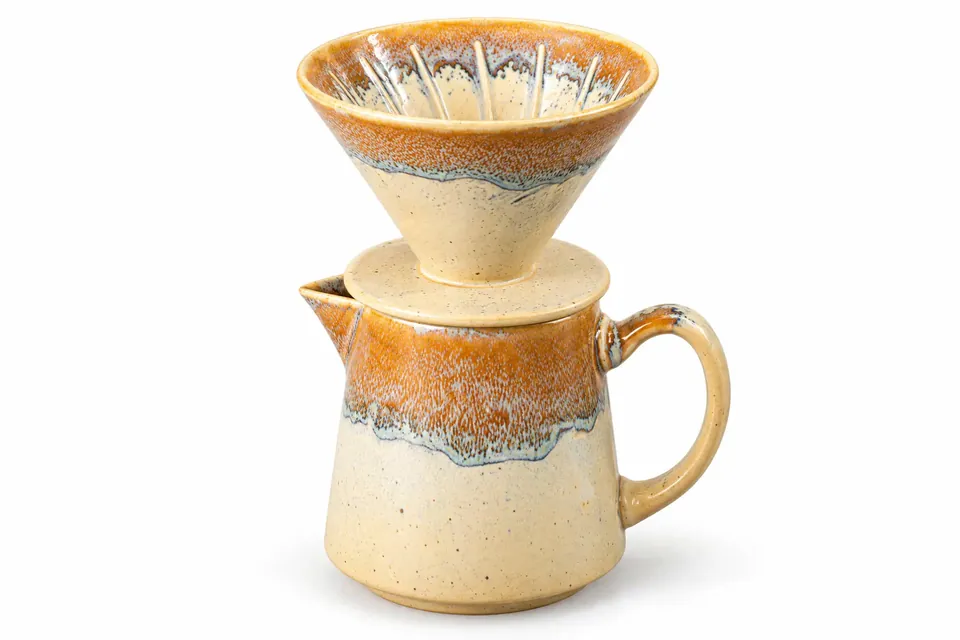
Odds are a case of Mai Dubai or Al Ain sits under your kitchen counter, while the kettle on top gets filled from the tap. Sooner or later both end up in a cup of coffee, so make them compete. Weigh 15 g of the same ground coffee into three paper filters. Cup A gets boiled tap water. Cup B gets boiled Al Ain or Mai Dubai. Cup C gets half of each. Use 250 g of water per cup and pour at the same pace, rinsing the server between brews. Get someone else to label the cups so you cannot tell which is which. Then taste, and jot down what you notice: sharper, flatter, sweeter, rounder. One 450 ml Yozcoffee pour-over set covers all three brews. Allow half an hour.
Why the question comes up in the UAE at all
Coffee is a morning habit here. In a 2025 Premier Inn Middle East survey reported by Khaleej Times, 69 per cent of UAE respondents named coffee as a breakfast drink, ahead of juice and tea. Khaleej Times Arabic quotes industry figures of more than 20 per cent growth in the Gulf home-coffee market since 2020, as people picked up café methods in their own kitchens.
Water is another story, because the UAE runs on bottles. A 2025 UserQ panel of 250 residents found 81 per cent drinking bottled water most often, 17 per cent drinking filtered home water and 1 per cent drinking tap unfiltered. Mai Dubai, Al Ain and Masafi were the brands named most. It is a small online panel, so take it as a direction, not a census. A 2015 survey of 891 residents showed the same gap from the other side: many people who rate tap water good or excellent still buy bottles, partly out of worry about contamination, including from storage tanks.
Anyone unboxing a new dripper is therefore asking a fair question. Is the water I stand beside every day fine for this, or will the bottle make a better cup?
What DEWA publishes about Dubai tap water
Nearly all of Dubai's drinking water is desalinated seawater. In its Integrated Report 2025, DEWA prints a potable-water specification for the Jebel Ali plant, with a typical value beside each measure. Total dissolved solids come to 254 mg/L. Total hardness is 60.7 mg/L as calcium carbonate, and calcium hardness 39.7 mg/L. Alkalinity is 49.1 mg/L, pH 8.21, sodium 61.9 mg/L. DEWA also lists a chlorine dioxide residual of 0.43 mg/L, which is the disinfectant. All of this describes the plant, not your tap.
Some softener sellers call Dubai water hard and quote 120 to 400 mg/L. We could not find a public dataset behind those numbers, and DEWA's own ceiling for total hardness is 120 mg/L.
Tap, Al Ain and Mai Dubai against the SCAA standard
The Specialty Coffee Association of America published a brewing-water standard in 2009. It is dated and it is not law, yet baristas still quote it. The table sets it beside DEWA's typical tap figures and the printed labels of the two bottled brands.
| Measure (mg/L unless noted) | DEWA tap, typical | Al Ain label | Mai Dubai label | SCAA 2009 target (acceptable) |
|---|---|---|---|---|
| Total dissolved solids | 254 | 110 | 127 | 150 (75 to 250) |
| Calcium hardness as CaCO3 | 39.7 | 20 | 50 | 68 (17 to 85) |
| Total alkalinity as CaCO3 | 49 | 25 | 15 | 40 (at or near 40) |
| pH | 8.2 | 7.3 | 7.2 | 7.0 (6.5 to 7.5) |
| Sodium | 61.9 | 8 | 3.5 | 10 (at or near 10) |
We converted the bottle labels ourselves: calcium times 2.497 gives calcium hardness, and bicarbonate times 0.82 gives alkalinity. Now read down the columns. Tap sits inside the range on hardness and near the target on alkalinity, but it misses on dissolved solids (254 against a ceiling of 250) and on sodium, and its pH is high. Both bottles are inside the range on dissolved solids and hardness, and on pH as well. Alkalinity is where they fall well short. Water that low in alkalinity buffers less of the coffee's acidity, so expect a sharper cup if anything. Neither is perfect. Taste them.
Why half and half is worth a try
Mix equal parts tap and Al Ain and the sums give roughly 182 mg/L of dissolved solids, 68 mg/L of total hardness, 37 mg/L of alkalinity and 35 mg/L of sodium. Hardness lands on the SCAA target, alkalinity lands near it, and sodium stays above. Tap with Mai Dubai comes out near 191 mg/L of dissolved solids, 76 of hardness, 32 of alkalinity and 33 of sodium. Those are averages of published labels, not lab results, and pH will not simply average out.
The bottle costs little. On 22 November 2026 noon Minutes listed a 6 x 1.5 litre pack of Mai Dubai at AED 8.10 to 9.95, roughly AED 1 a litre. A 250 g brew takes about 25 fils of bottled water, or 13 fils if the other half comes from the tap.
The tap is not the plant
Once it leaves DEWA, the water goes into your building's tank and through its pipes. Dubai Municipality's technical guideline asks operators to have drinking water tested every six months by an accredited lab, and tanks cleaned by approved companies. A Dubai Municipality food-safety director told Emarat Al Youm in 2019 that tap water in the emirate is drinkable as long as tanks are kept clean. A 2016 Zayed University study of 40 Dubai houses found bacteria above the standards in 18 tanks. Want to know what your own tap carries? Ask building management for the latest test report.
A TDS meter will not settle it either. DEWA's own table shows 254 mg/L of dissolved solids against only 60.7 mg/L of hardness, because sodium and chloride count as dissolved solids too.
What this test cannot tell you
The SCAA standard dates from 2009, and newer research says water changes the cup in ways people still argue about. DEWA's numbers cover Dubai only. Other emirates have other utilities, and we found no primary hardness figure for them. Bottle labels are rounded and vary from plant to plant. The surveys behind the bottle habit are small, and the bigger one was published in 2015. This guide is also about taste, not safety. If you have doubts about your building's water, follow Dubai Municipality guidance and stick with the bottle.
One more use for the numbers. If you pour filter coffee beside gahwa, the same water goes into both. The volume maths in how many finjans a flask pours and the flask serving calculator work for either, and serving two coffees at one majlis covers the second jug. Start with the test, though. Brew it this weekend, write the result on a sticky note, and stick it to the kettle.
Common questions
Is Dubai tap water hard?
DEWA gives a typical total hardness of 60.7 mg/L, within a specification of 40 to 120 mg/L at the plant. That is well below the 120 to 400 mg/L that some sellers quote. Your building's tank and pipes may change it, so measure if you need to know.
Is Al Ain or Mai Dubai better for pour-over?
Neither wins outright. Al Ain is lower in hardness and a little higher in alkalinity, while Mai Dubai is higher in hardness and lower in alkalinity. Go by the label numbers and your own tasting.
Should I buy a TDS meter for coffee water?
It reports total dissolved solids only and cannot separate hardness from sodium and chloride. Use it for a rough check, not to choose between waters.
Does this apply to Abu Dhabi or Sharjah?
The tap figures here are DEWA's, for Dubai. Look up your own utility's numbers and run the same test with the bottle you buy.
Sources (figures checked 22 November 2026)
- DEWA PJSC Integrated Report 2025, page 155: potable water specification, Jebel Ali
- SCAA Standard, Water for Brewing Specialty Coffee (2009)
- Dubai Municipality, Technical Guidelines for Quality of Unbottled Drinking Water (2024)
- الإمارات اليوم: بلدية دبي تطالب بتنظيف خزانات المباني (2019)
- خليج تايمز: هوس القهوة الفاخرة في الإمارات (2025)
- UserQ: UAE water drinking habits survey, n=250 (2025)
- Maraqa and Ghoudi: public attitude to bottled and tap water in the UAE, Global NEST Journal (2015)
- Khan and AlMadani: microbial quality of household water tanks in Dubai (2016)
- Al Ain water label as listed on Talabat
- Mai Dubai Water, mineral composition and noon Minutes listing (hardness, dissolved solids, price)
- Khaleej Times: UAE breakfast survey (2025)